Live Rock

Home Lighting

What is Live Rock?.

For many people (especially some dealers) the term live Rock can mean a variety of different things. It is commonly the case whereby the unsuspecting customer is sold nothing more than a few pieces of bacterially active rock that has spent some time cooped up in a dark corner of their local LFS. The following sections are aimed at providing some simple notes on the 'what's, where's and how's' of dealing with this expensive but but amazingly useful commodity.

Simply put. Live Rock is a porous rock of oceanic origin found around the reef areas as rubble or boulders which is riddled with beneficial bacteria and a multitude of other organisms that can be used to fulfil part of the filtration of our aquarium. I say 'part' because on its own LR can struggle in a heavily stocked system and as such 'IMO' should not be considered as the 'be all and end all' of what we need to keep our water healthy, but as part of a full circle of filtration that meets the needs of our captive animals when used in combination with such things as Skimmers, DSB's or Plenums or even a simple shallow sand bed, but ill get to this later. The easiest way of thinking of LR is to think of a stony sponge, filled with cavities and tunnels that channel water through them. This channelling of water at ever deceasing speeds is what gives rise the the rocks ability to act as a biological filter in much the same way as the two previously mentioned methods 'the DSB and the Plenum'. Partly by forced induction (i.e. the force of water flowing over the rock) and partly by diffusion at the inner areas. on the whole, the inner areas act on dissolved organics such as Nitrate, Nitrite and ammonia, whilst at the surface a degree of  particulate waste is drawn into the rocks structure where the same bacteria we find in our sand bed break it down through Amm to Nitrite to Nitrate and then into the final stages of N2 and N2O gas which then diffuses back out to the water column to escape harmlessly from the water surface and into the air. There are a few subtle differences though that can seem quite alarming to the untrained eye.

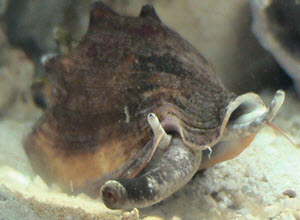
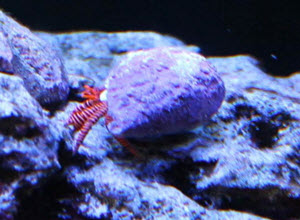
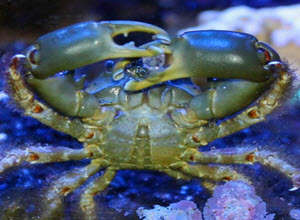
Unlike our sand beds which we try very hard to ensure against compaction and dead areas via the use of various worms etc. LR has an inherent drawback for some creatures, in that there will always be some regions within the rock that are too hard to burrow into and as such will go 'off' giving rise to the production of hydrogen sulphide (now don't panic and go rushing off to rip all your LR out). This is perfectly normal and unavoidable. At some point in time all these areas will inevitably be breached by one burrowing organism or another, and will consequently flush out into the water column. The reason this is not a concern is that this happens at such a slow rate and very sporadically as to offer no risk whatsoever to the rest of our livestock or to the creatures living inside the rock itself, in fact its what happens in the wild so who are we to argue. These areas can easily be seen when splitting or cutting LR open, as very dark or black areas / spots within the makeup of the rock itself. The other main difference is the diversity of higher life forms that can be present. This can be astounding on good quality LR that has been handled carefully with attention to preservation of these organisms. So much so, that hundreds of differing species of organism may be present on one piece alone weighing just a few kilo's. These can range from numerous differently coloured calcareous algae's, macro algae's, bristle worms, boring worms like the peanut worm, a multitude of crustaceans, such as very small crabs, shrimps, various pods, sponges, tunicates, polyps, mantis shrimps (not so good), pistol shrimps (pretty harmless really), serpent/ brittle stars, various hydrozoans, sea slugs, chittons, snails, sea squirts, etc etc etc, the list goes on and on.

Apart from being extremely interesting to watch, these organisms play a vital role in the collection, assimilation, and breakdown of detritus, uneaten food and algae films which would otherwise build up clogging the rocks porous structure,, causing a reduction in water quality over time to the detriment of our stock. The potential for waste removal and breakdown that these creatures and bacteria have can be massive in a well maintained and stable set-up. As such its imperative when we purchase our LR that all necessary care has been taken to preserve as much of this vital life as possible. It is equally as important that we bare this in mind when setting up our LR once we get it home and place it in our aquarium. To this end, we should also remember that Live Rock has a 'dark' and a 'light' side. The light side is the surface that has the highest degree of calcareous algae, or macro algae's, also any polyps that are present. The dark side will usually be dominated by shade loving organisms such as sponges, tubeworms, and sea squirts etc. It is vital that when we put it into our aquarium, the rock is placed in a position that mimics its original position in the wild to ensure the survival of all these creatures.


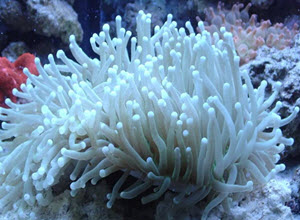
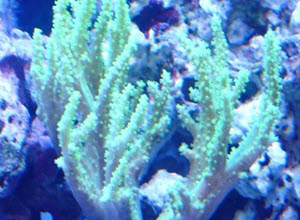
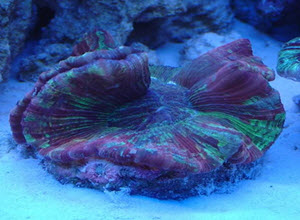
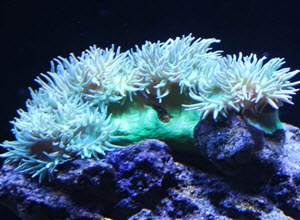
( Many thanks to Phil.K and Tuan for the excellent LR photo's. Tuan's tank can be seen at Reef Haven )

What do we look for in Live Rock?

This question often leads to various arguments, as to what is best, and above all, what is good quality. There are various differing grades of LR from various sources that have differing characteristics depending on what you wish to achieve. So here is a quick breakdown of the common terms and uses for each type.

1. Base rock. This is usually quite bulky heavy rock that lacks allot of the higher (surface dwelling) organisms we are looking for to add diversity. It is very common that this rock will only be 'bacterially active' with only a small number of burrowing worms or bristle worms due to its lower porosity and denser structure. Commonly used as a cheap way of building the reef structure up without the extra cost of using only high grade LR. As this rock will spend its time as a support for more aesthetically pleasing finishing rock, it is usually quite shaded and barren to the eye. It is becoming more popular of late to rely less on this type of rock for reef construction, and more on an artificial means of support for the better rock. Although there is some drawbacks in that you are reducing the overall amount of rock used and consequently the amount of biological filtration available to the system. The use of a suitable DSB or Plenum can offset this easily. the benefits are increased water flow and a looser, more open rock structure that prevents the build-up of detritus that 'could' otherwise collect around this type of heavy rock that has a nasty habit of deadening the water flow considerably. Base rock, also goes by the name of 'ocean rock'

2. Fiji or Caribbean LR. There are frequently discussions raging over which is best however put simply there are good examples and bad examples of each type. It really is down to the individual to ascertain and pick out the best pieces with attention to the amount of diversity present and the overall aesthetics of what they are trying to achieve. IMO Fiji seems in general to offer a better diversity, a more plate like shape and a more porous nature, whereas Caribbean can be found to be a bit bulky and round. But as I said there are good examples of each. As to mixing these two types together then that is purely for the individual to decide, as there are purists among us who rigidly condemn the mixing of species from differing locals. IMO in relation to LR this is a bit OTT as a Peanut worm from Fiji is much the same as a Peanut worm from the Caribbean, except for some colouration maybe?, plus the potential for diversity is increased if you do 'mix' a little. Yes there will always be some species that may or may not combine happily with each other just like our fish, however the spread of diversity in these lower organisms, and the biological differences baring in mind the distances that the larval stages can travel before settling means that they are all closely related to each other anyway, rather than the big differences that are seen in related species of higher organisms like fish etc which are effectively trapped due to the open barren stretches of ocean between the tropical landmasses. This is not necessarily a factor to a larvae that is drifting for a few weeks in the warmer surface layers before coming to ground on some new reef area. Commonly this rock will display various types of encrusting coralline algae in various shades of pink and purple, plus various polyps, sponges, macro algae and if your very lucky, the odd baby coral etc. Personally I prefer topping off the reef structure with Fiji plate rock as this provides a nice stable support for attaching corals etc rather than the more bulky Caribbean.

3. Branch Rock. For those not too fussed about extra biological filtration of a de-nitrifying nature (i.e. larger Sand bed based systems) then this rock can offer a really nice change and can look very impressive if aquascape'd correctly. The word rock in its literal sense is a little misleading here however as the foundation for this stuff is actually the broken remains of heavy branching corals (storm damage etc) that have become grown over and bonded by years of coralline growth, and settling organisms. It is especially useful in mainly SPS systems where high circulation is required, detritus build-up must be kept at a minimum, and obstruction to flow is not wanted which is inherent when using the more solid forms of LR. It should be remembered though, that this rocks ability at nitrification and de-nitrification is limited when in comparison to other types of LR due to its less porous nature. So other methods must be utilised to support this.

4. Aqua cultured or 'Seeded' LR. Now this ones a bit of a grey area as just about any rock you lay your hands on may or may not be cultured. effectively all this means is that the rock in question is of a calcareous nature, has been mined and then deposited in an area of shallow ocean 'just off shore' where it sits and becomes colonised by the organisms mentioned above. Or in some cases, has been done in specialised vats at some location not unlike your LFS. In real terms this (captive cultured) rock will never be as diverse as that rock left in the ocean simply due to the amount of biodiversity present in the ocean, which cannot be mimicked inside a closed system. To that end as well, the duration that the cultured rock has spent in the ocean will also play a large part in how diverse it is, and whether that life is settled or just settling. (sometimes I despair at what 'some' dealers sell as LR, which is nothing more than a few pieces of rock that have spent about 1 month in a holding tank with some other bits of good quality rock) 'real' cultured LR should have spent at least 1 year being colonised prior to selling on, if not more. As to cultured LR's suitability for the reef aquarium, then there will always be a few inherent risks that rock has been used that 'may' be contaminated vie some land based pollution prior to its introduction to the ocean, or that foreign bodies 'may' or may not be present ( I myself have found a large chunk of iron ore embedded in a piece of this rock some time ago which was disguised by coralline growth). so it just goes to show that there is always a benefit in taking the trip to pick your pieces yourself rather than relying on mail order. but this is just a personal opinion and in no way detracts from those organisations that offer a good and professional mail order service.

5. Uncured or Un-seasoned LR. Now this stuff is the real McCoy, Strait out of the bag and strait from the sea. This is where we get the highest degree of diversity but at a price. In that, I mean  you cannot just add large amounts of uncured LR to an established system due to the very high risk of ammonia poisoning inherent with the death and decay of various organisms on the rock that will always die off in transit. For this stuff we need to take the time to acclimatise the rock and its diversity back to water again that is as close to NSW levels as possible (LR is usually shipped dry i.e. just by itself with no water present as this would greatly increase the shipping cost.) To do this the rock needs placing in large containers like Vats or food grade bins. And is then given strong aeration and circulation whilst all the dead and dying organisms are removed by hand in an effort to minimise the loss of other organisms due to toxic shock. This will also include copious water changes to dilute the accumulated Amm, nitrite and nitrate, and regular daily testing of the water in which the rock is acclimatising The need to arrest the climbing Ammonia is paramount to the preservation of the remaining life. Various methods can be employed to arrest this, such as Fluidised filters, ammonia reducing compounds, or the more recent application of Phytoplankton although I am unacquainted with this method at present so therefore cannot comment from experience. But the main principle, is to remember that rising Ammonia levels will cause the die off of further life forms which compounds the situation further and further. If done correctly with attention to detail, then a massive amount of life can be saved. but it can take time till no NO2 is spotted and NO3 production has stabilised. It is only at this point that we can think about adding it to our set-up where other organisms are already present. If we were setting up a new tank, then it is quite feasible to do all this work in situ, however there are inherent problems especially where a large tank is concerned in relation to changing all the water in an effort to rid the system of the build-up of waste products. personally I would recommend the food grade bin method. If done correctly and carefully in terms of handling then it is very common that various larval stages of different corals may survive the transition from reef to home aquarium, and great pleasure can be had witnessing their growth and development from nothing more than an insignificant little blob that we wouldn't  normally have looked twice at. This can also be the case in some 'well managed' batches of higher grade Fiji or Caribbean rock as well.

6. Homemade Live Rock. It is possible to manufacture your own live rock. this involves a mix of crushed coral gravel and Portland cement which can be made into various shapes. I wont go into too much detail here suffice to say that this subject is dealt with in great detail on these pages at the Thiel InfoBase website.  Click Here  Although this isn't really Live rock in a literal sense its propensity for rapid colonisation is well known. not to mention the savings that can be achieved. IMO a 50/50 mix of real live rock and homemade LR would see a well established reef in under 2 years quite easily. I am of the opinion though, that no matter how hard you try, its incredibly difficult to avoid getting that 'artificial' look, not when you consider mother natures propensity for creating completely random shapes. However, should you like a challenge like I do, then feel free to visit my DIY pages to see my efforts using the salt crystal method which offers a good degree of porosity over older methods. After two years in my new system I can honestly say that with proper seeding, then Artificial live rock can work just as well as natural sources, plus from an environmental angle, Its far kinder to reefs.

7. Reef Bones. Recently on the market there has been a product called 'reefbones' available. Fundamentally, these are the dried out remains of old coral and branch rubble. Its cheaper than live rock mainly due to its lower shipping weight and the lack of requirement to keep it stable as far as shipping goes. In effect it is 'dead' live rock.  The idea behind reefbones is that it is used as the main structure, and seeded with a mix of real live rock to induce re-colonisation. I am of the opinion though after seeing various tanks set up using this material, that the results are commonly not quite as expected with prolonged bouts of algal infestation during its initial curing and re-colonisation fazes. sometimes in excess of a year. The only explanation I have for this trait, is that the degree of dead matter trapped within the structure of the rock varies from batch to batch. Once added to water, this desiccated matter then takes on water and gradually leaches out any organics previously trapped as phosphate and nitrate.  The only real way around this as far as I can see is curing in a dark environment for the first several months to inhibit algal infestation, whilst skimming heavily to remove any particulate organics released, and performing regular water changes of the curing vat to flush out the rock effectively. There is no doubt though that in some cases the result with Reefbones have been very favourable.

Overview.

 As can be seen above. There are various differing methods and types of rock we can use, however I cannot stress enough the importance of securing 'good quality LR' from the onset. Don't settle for being charged the earth for a few pieces of Tuffa that have just happened to be housed with some real LR for the last two or three weeks, this is not LR in its proper terms. Likewise LR that is riddled with Aptasia or has gone white due to Coralline die off is no use to us either as we are going to end up with a plague of the things that we will fight to get rid of. Any rock that has been in contact with the LFS 'fish systems' should be avoided at all costs as nearly all will employ a regular background dose of copper based medication in an effort to keep disease down in their stock which are inherently stressed to some degree or other. Any LR that has come into contact with such medications will be riddled with dead and decaying worms etc that have been poisoned from the lethal effects of copper.

Once we are happy that the LFS has treated the rock as it should be, we can then think about picking our pieces out, based on our set-up and aesthetic requirements. When inspecting the rock we should keep an eye out for pest infestations such as Aptasia or flatworms and then have a quick smell to ascertain its health. cured or seasoned LR should smell fresh and clean, whereas Uncured LR will inevitably smell slightly off due to the die off in transit of some of the organisms present however this should not be overpowering to the extent that it is obvious there has been massive die off.

Rules of Engagement.

Once we get our live rock home, it is very tempting to just pile it in the tank with no further thought, however if we take our time to study a few pictures of reel reefs we would notice that very rarely does mother nature just pile things up in a closely slotting heap. What we do notice about reefs, is that they are surprisingly complex structures, usually with a few dominant features but quite often very open and as I like to term it 'gappy'. these open spaces, tunnels, and columns are what channel water through the reef to keep it healthy, well circulated and help in the breakdown of waste matter. We should therefore bare these features in mind when constructing our LR and hopefully mimic one or more of these areas. Looking at photo's of reefs on the web is an ideal way to achieve this. The necessity for good circulation throughout the rock structure cannot be stressed enough though. A nice clean flow of water through the rock structure not only balances out any differences in water chemistry from one area to another, but also prevents the build-up of excessive detritus on the surface and inside the pores of the rock as well. If we allow our rock to become suffocated by lack of flow then it is a very real possibility that localised algae outbreaks will occur because the life forms present can only deal with so much solid waste at any given time. As such it is a common question on many bulletin boards 'how much LR do I need for 'x' sized tank' well the simple fact is that there is no definitive figure. Allot depends on what you are trying to achieve and what you are trying to keep. Suffice to say that contrary to older methodologies 'less' is quite often better than too much in relation to tank size and water volume. A tank that is filled to the brim with LR will have a large biological capacity but will be a pig to keep clean and algae free due to trapped waste and reduced water flow, whereas a tank with a more open rock structure will be cleaner and healthier overall. There are various methods to achieving these more open structures, from gluing rocks together with an epoxy putty, to cable tying to frames constructed from tubing. Which ever method is employed it is important to keep the structure fairly open to allow water flow, but at the same time stable. it is extremely disheartening to loose a prized fish or coral due to a rock tumble which can be very often if we keep creatures like urchins or large snails or cowries. Setting the LR out on a large piece of cardboard or plastic sheet prior to final placing in the tank is a good way of checking how individual pieces will lock or link together and for working out if any extra holes need to be drilled in preparation for cable tying into position. Once we are happy with what we are trying to achieve, and all water parameters are adequate. We can add our LR, playing close attention to which way up each piece is in accordance with its dark and light side. There are various opinions as to whether LR should be lit or not during the maturation process in new aquariums in an effort to keep problem algae outbreaks to a minimum. My honest opinion on this is yes it should be lit. Many of the organisms we are trying hard to keep alive are dependant on strong lighting, and will die off if we don't, just adding to the pollution, and causing even more problems. If good quality LR is used, then the amount of die off and algae causing pollution should be minimal. In fact, I feel the act of reducing or cutting light levels during the break-in period, just extends this process. If its going to happen, then its going to happen. Reducing or increasing lighting periods just lengthens or shortens this scenario.

One of the other concerns when using LR in combination with DSB's is whether it is acceptable to place the LR 'on top' or 'in' the sand bed. IMO placing the LR on the base of the tank and then putting the sand around the rock is far better than placing the LR on top of the sand bed which will cause compaction and possible dead spots in the sand bed from the weight of the rock above. Although there are no definitive long term answers on this. I believe that common sense should preside. Just be careful you don't have too much weight pressing down on a pointed rock that is pressing against your tank base. In this case, it might be advisable to cut some of the lower support rocks to give a flat face so that the weight is spread. The other alternative is to build the rock structure above the sand bed on some kind of support like an egg crate frame. this method avoids the compaction issue. The other benefit is that you are not wasting valuable LR by burying it where it will never be seen. Possibly the only drawback to this method is that you wont get the rate of migration from the rock and into the sand bed that you would normally get by having the base rock in or on top of the sand bed. IMO this is negligible, in that you would inevitably want the front pieces of rock to overlap the egg crate support just into the sand bed in an effort to hide it anyway, so some migration will occur no matter what. It will just take longer. It should also be considered that much of the life in sand beds doesn't actually originate from LR at all anyway. Many species will need introduction from other sources covered on the DSB page elsewhere on this site..

Here is one method you can use to good effect..

On my last set-up, I went one step further. My original plan was to build the rock structures on top of an island built of an inert expanding foam substance called 'reef creation foam' Which is sprayed onto he tank base and then expands just like cavity wall insulation, and can be carved once hardened. Unfortunately this substance seems to have vanished from the market so I'm unsure as to its availability now. I then changed my plans  in a fashion that negates the worry of sand under the rock structure but still creates the impression of a full sand bed. This consisted of making a wall of acrylic sheet in the shape of an island just higher than the  depth of the surrounding sand bed (in my case a shallow bed of just over 2" Aragamax in the main tank). This wall and a series of 2" lengths of tubing were silicone'd to the base of the tank which then supports the egg crate sheet which should have a hole gauge of no more than 10mm, which prevents hermits and the like falling through into  the cavity below the LR. This space  also housed the circulation spray bar that forces water (3000lph from an aquabee 3000) up through the LR structure. As such it is highly unlikely that this space would collect any waste as the water flow will effectively wash this area out. (see photo below)  this area also becomes an area of protection for smaller creatures such as pods, tubeworms sponges and sea squirts etc where they may reproduce unhindered by predation, not unlike an invisible refugium. Should anything else like uneaten food make its way down into these areas then brittle stars etc will quite easily cope at reaching down to retrieve anything edible. In effect this method is no different to those keepers who use reef racking to support their LR whilst having a DSB at the front of the tank which is held in place by a deep strip of glass just in front of the racking. IMO the only drawback with this method is the unrealistic 'wall' effect you 'can' end up with, which sometimes looks like a grocers stall with corals on display. The other drawback with the reef wall aquascape, is that it plays havoc with circulation unless you employ powerheads or the like along the back wall to flush this area out but then you can have serious problems if these fail, resulting in an entire strip down of the structure in order to access them.. This was one of the main reasons for opting for an island design that is flushed from underneath via spray bars but still allows for substantial flow through and just as importantly 'around' the LR structure. I feel that this is more inline with the natural order of things in the wild as well.

The following shots show the island wall made from 2 1/4" deep acrylic strips. The additional 2 1/4" upright tubes are silicone'd into position to distribute and support the egg crate once it's cut to match the shape of the island. When the LR is added on top, it will sit just overlapping the edges of the Egg crate into the surrounding sand to disguise it, however any exposed areas will soon become covered with coralline algae and blend in.


These Pictures show the construction of the island wall, including the central spray bar which flushes the cavity out and forces water up through the LR above. once the surrounding tank base has been filled with sand 'up to the level of this island' and the LR has been added, hanging over the edges to conceal the egg crate. an impression of natural reef structure will be obtained without the long-term concerns over compaction or dead areas of un-tended sand.


These two photos show how the two main rock structures are positioned in a way that allows water to flow around and through each area. You will notice how placing any rockwork close to the back panel has been avoided. This will free up water volume for the fish to swim, whilst at the same time giving up more lit area for the sand bed which would be shaded otherwise if I had used a reef wall type construction. In the second picture you will notice the spray/return bar that feeds down the centre of a proposed reef column. These structures are quite common on the edges of the reef, frequently springing up out of the sand here and there. they can be home to a multitude of different species, like branching and plate corals. whilst fish hover around them like they were tiny oases that can offer instant protection should a hiding place be needed.

Although this method might seem wasteful of possible sand space. The system does incorporate a sump based DSB as well as the shallow tank based sand bed. In actual terms the overall surface area in the entire system is along the lines of 11sqft. Ranging in depth from just over 2" in the main tank to 4+" in the sump, so the loss of some 4sqft is no great issue in my opinion.

Constructing the LR support

This is quite a simple task really. Take one sheet of acrylic (obtainable from B&Q for about £16 for a 4'x2' 3mm sheet) and cut into strips the same width as your desired sand bed depth. This is easily done with a strait edge and a Stanley knife to score a deep 'slow' line. then crack off the strip over the edge of a work surface or the like. Once you have your strips, its then time to form them over a heat source. I used the ring on my gas cooker about 6" above the flame so that the acrylic goes soft without melting or bubbling at which point it will go very brittle. simply bend the now soft acrylic to match the shape you have chosen for your structure. and then let them cool down. I then turned them over and applied a thick bead of silicon sealer to the edge that will meet up with the tank base. (this must be clean and fingerprint free to ensure a good bond) push the strip down onto the tank base at the required spot and then run a wet finger along the silicon where it has now pushed out on each side to make a nice neat seal. (just like the inside edges of your tank). The main supports are made from sections of 21.5mm tubing (as used for the closed loop piping) which are cut to the same height as the acrylic wall with circulation holes drilled through them to prevent stagnation of trapped water.

These are then silicone'd to the tank base, at even intervals to spread the weight of the LR once placed on top of the egg crate. large gaps will cause bowing of the egg crate once the rock is added so this spacing is important. I would also recommend placing several tubes around the inside of the wall to take the load off it. This will also help support the wall from the sideways force of the surrounding sand. I have been asked as to the depth limitations using this method, and my honest opinion is that I would not want to go much deeper than about 5-6" using these particular materials. For deeper beds I would recommend going up in thickness of the acrylic wall to say 5mm, and up the tube diameter to say 32mm. I would also be tempted to make the side walls in a more 'corrugated' fashion to increase sideways stability.

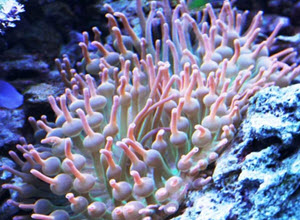
These shots show the full rock layout after settling in and colonisation with corals etc. As you can see the result is a very natural reef 'bommie' or ridge. None of the support platform is visible with the surrounding sand bed. This also land locks the anemone seen in the R'hand picture, preventing it from wandering. this Rose bubble tip didnt move from that spot in well over  2 years.


For more Info on Plumbing your own system and in depth details on how I did this tank. look at this page ...  Plumbing


Home Lighting